


Building cooperation for recovery: NDPC co-hosts Ukraine-Finland cultural exchange
A three-day visit to Helsinki brought together Ukrainian, Finnish and wider Baltic Sea region cultural stakeholders to discuss cultural preparedness, heritage protection and recovery.
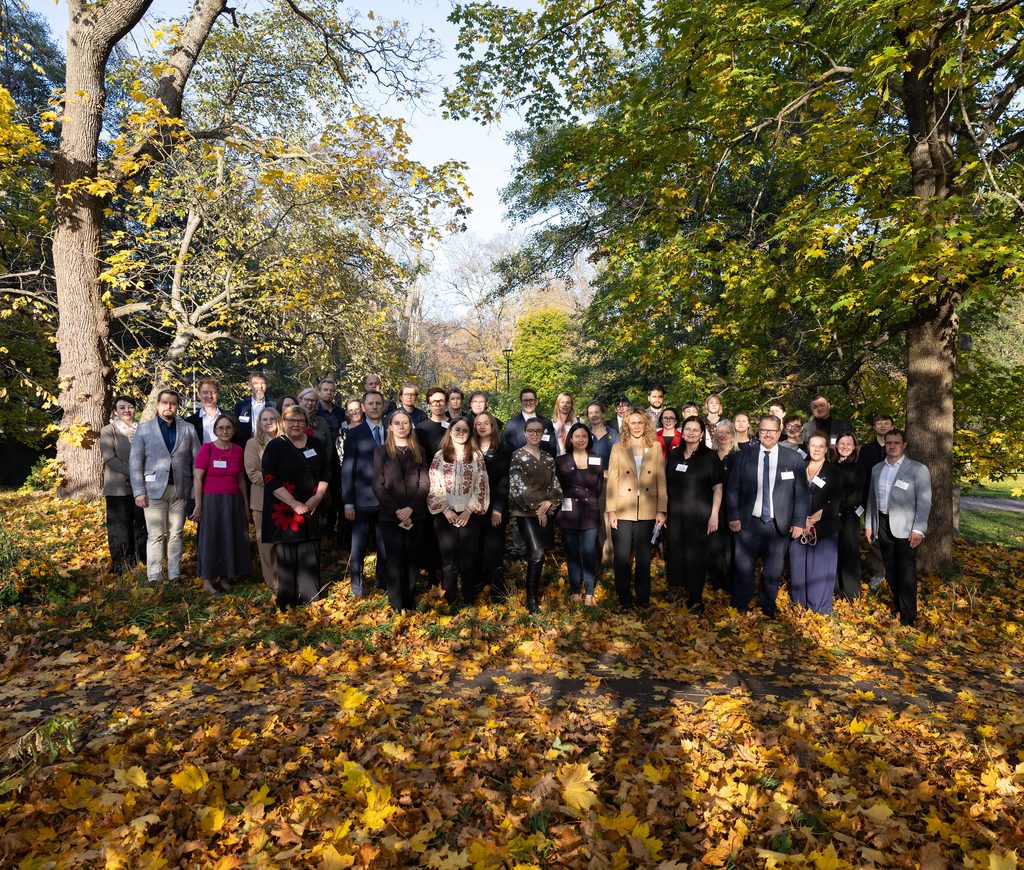
Participants of Culture in Times of Preparedness and Recovery, Helsinki, 22 October 2026. Photo: Lauri Heikkinen / Prime Minister’s Office, Finland.
How can culture support societies in times of crisis? And what can be learned from Ukraine’s experience of protecting cultural heritage and sustaining cultural life during wartime?
These questions shaped Culture in Times of Preparedness and Recovery, a dialogue seminar held in Helsinki on 22 October 2026. The event was organized by the Ministry of Education and Culture of Finland and the Ministry of Culture of Ukraine in collaboration with the Northern Dimension Partnership on Culture (NDPC). It formed part of a three-day visit involving 42 participants, including a 15-member delegation from Ukraine.
Culture as a pillar for security
The discussions explored how culture contributes to preparedness and resilience, from strengthening social cohesion and democratic continuity to maintaining trust and community well-being during war. The seminar opened with online remarks by Kristiina Kokko, State Secretary of Finland, and Tetyana Berezhna, Deputy Prime Minister for Humanitarian Policy of Ukraine and Minister of Culture.
A discussion featuring Anastasiia Bondar, Deputy Minister of Culture of Ukraine, and Juha Rintamäki, Director General of Finland’s Ministry of Education and Culture, examined the priority areas for Ukraine–Finland cultural cooperation within the Team Europe framework.
As Bondar highlighted in her speech, culture is an integral part of national security. She also shared recent data on the ongoing attacks on Ukraine’s cultural heritage: 2.1 million museum items remain temporarily in occupied territories, more than 35,000 museum items have reportedly been stolen by Russian forces, and 1,913 cultural heritage sites have been destroyed. These figures underscore a stark reality: cultural heritage is not only at risk as a consequence of war, but is also a target.
The programme also featured a knowledge contribution by Lina Kirjazovaite, an expert with the IFA Research Programme “Culture and Foreign Policy” at Culture Policy Room, who presented preliminary findings from an upcoming report on culture’s contribution to resilience, preparedness and security in Finland and the Baltic states, drawing on lessons learned from Ukraine. Her presentation highlighted five possible functions of culture in times of crisis: safeguarding heritage and documenting war; creating new work and meaning; connecting people and communities across borders; supporting dignity and psychosocial well-being; and mobilising creative skills, spaces and networks for advocacy, fundraising and volunteering. Taken together, these insights underline the importance of connecting cultural policy with broader approaches to preparedness and security, while recognising the experiences of Ukrainian cultural institutions in sustaining cultural life during the full-scale invasion. NDPC serves as a communication partner for the forthcoming report, which will be launched later this year.
Protecting cultural heritage and supporting recovery in practice
Practical approaches to safeguarding cultural heritage were explored during a workshop on Digital Cultural Heritage in Times of Crisis: Wartime Experience, Preparedness and 3D Documentation. The session featured Oleksandr Lasko, Director of the Department of Innovations and Digital Transformations at Ukraine’s Ministry of Culture; Vasyl Rozhko, Founder of the Ukrainian Heritage Monitoring Lab (HeMo); and Konstantyn Vynokurov, Board Member of eMuseum. Discussions focused on practical experiences of 3D documentation of cultural heritage in wartime Ukraine.
The afternoon programme turned to recovery initiatives, financing mechanisms and international support for Ukraine’s cultural sector. Examples from Team Europe cooperation and other international support frameworks highlighted ways to strengthen partnerships and coordinate recovery efforts. Further contributions examined the Ukraine Cultural Heritage Fund as a mechanism for protecting and restoring cultural heritage affected by the war. During the visit, Finland’s Minister of Science and Culture, Mari-Leena Talvitie, announced Finland’s commitment to joining the Ukrainian Cultural Heritage Fund.
Sharing insights from NDPC’s study visit to Kyiv
From 14 to 18 September, an NDPC-coordinated delegation visited Kyiv as part of the Ukrainian Institute’s On the Ground programme to gain first-hand insights into the role of culture during the war.
These insights were brought into the session Culture in Crisis and Recovery: Practices from the Ground in Helsinki, where Head of NDPC Secretariat Krista Petäjäjärvi shared reflections from the visit alongside Emilie Gardberg, Director General of Arts and Culture Agency of Finland and Olga Yurkova, Head of the Cross-sectoral Programmes Department at the Ukrainian Institute. The session continued the dialogue initiated in Kyiv, sharing the gained experiences from Kyiv and what Finland, the Baltic States and Europe can take-away as learnings. Given the large amounts of details and learnings related to the visit, a dedicated feature story will be published by the NDPC in November 2026.
Continuing dialogue and cooperation
The event concluded with a discussion on priorities and next steps for Ukraine–Finland cultural cooperation. The exchange focused on identifying opportunities for practical collaboration and strengthening connections and support.
Since June 2024, Ukraine has been an observer country of NDPC. With Russia’s full-scale invasion of Ukraine continuing, the Partnership is committed to exploring every possible avenue to support Ukraine’s cultural sector. By bringing together cultural organisations, professionals and partners across the Baltic Sea region, NDPC seeks to share knowledge, raise awareness of the challenges facing Ukrainian cultural institutions, and turn solidarity into concrete opportunities for collaboration. The discussions in Helsinki mark another step towards this goal.
As Krista Petäjäjärvi, Head of the NDPC Secretariat, emphasises:
“NDPC looks forward to playing an active role in facilitating further exchange with Ukrainian peers. This work will continue through knowledge sharing and the development of more sustained forms of cooperation with the Ukrainian Institute and other partners in Ukraine.
For us, Ukraine offers a valuable opportunity to learn first-hand about the role of arts and culture during wartime, generating valuable knowledge and insights that inform approaches to cultural resilience and preparedness across NDPC member countries and Europe more broadly. At the same time, this cooperation calls for innovative approaches to expressing solidarity and providing meaningful support to Ukraine’s cultural community on a continuous basis. As the war continues, building on collaboration with Ukraine must be a priority.”
More insights from the September 2026 study visit to Kyiv will be coming soon in an editorial story by Ukraïner, to be published on the NDPC channels in November 2026.
Media contact for more information: krista@ndpculture.org